
Burlington Phone Code Dialing
Burlington uses 10-digit local dialing because 743 overlays 336. A local call needs the area code plus the seven-digit number, even when the call stays inside Burlington, Graham, Elon, Mebane, or another nearby Alamance County community. On a mobile phone, saving contacts as +1 plus the 10-digit number is usually the cleanest format because it works for local, long-distance, and many travel situations.
The daily dial flow is simple: local call, dial 10 digits; some landline long-distance calls, dial 1 plus 10 digits; international landline call, dial 011 plus the country code and number; mobile international call, use the plus sign and the destination country code. The first feature here is the dialing sequence because it is the practical phone code behavior Burlington callers use most often.
| Call Type | Dial Flow | What It Means |
|---|---|---|
| Local within Burlington | Area code + seven digits | Required since 2016-04 because of the 336/743 overlay. |
| Long distance within the NANP | 1 + area code + seven digits | Common on landlines, with carrier and billing rules varying by plan. |
| Toll-free | 1 + toll-free prefix + seven digits | Uses a toll-free NPA such as 800, 888, or a newer expansion prefix. |
| International from landline | 011 + country code + local number | Traditional U.S. outbound international format. |
| International from mobile | + + country code + local number | The plus sign replaces the international access prefix. |
Burlington N11 Phone Codes
N11 codes are short service routes, not normal agency phone numbers. They are useful in Burlington because they point to broad public functions: emergency response, crisis care, community referral, carrier service, relay access, and utility-location requests. One local finding matters: no official Burlington 311 service was confirmed in the research. For city service questions, use the City of Burlington staff and department directory instead of assuming 311 reaches local government.
| N11 Code | What It Reaches for Burlington Callers |
|---|---|
| 211 | NC 211 for food, housing, utility help, mental-health referrals, senior services, and nonprofit resources. |
| 311 | No official Burlington 311 confirmed; use the city department directory for non-emergency municipal routing. |
| 411 | Directory assistance (carrier-billed) |
| 511 | Travel and traffic information where supported by state or regional systems. |
| 611 | The caller's own phone carrier customer service, not Burlington government. |
| 711 | Telecommunications Relay Service for TTY, TDD, speech, and hearing access. |
| 811 | NC 811 for underground utility locate requests before digging. |
| 911 | Emergency police, fire, and EMS calls only. |
| 988 | Suicide and Crisis Lifeline by call, text, or chat. |
NC 811's locate-request page is one of the assigned Burlington phone-code screenshots for homeowners, contractors, and utility work.
The 811 service is a phone-code use case where the short code matters before a shovel, fence post, or small project disturbs underground lines.
Burlington Star Phone Codes
Vertical service codes are the star codes used to turn call features on or off. Burlington callers may still see them on landlines, business lines, and some carrier services, but support is not uniform. Fees, availability, and the exact confirmation tone or prompt depend on the phone company. Treat these as feature requests to the carrier switch, not as public records tools.
| Star Code | Common Action |
|---|---|
| *57 | Call trace (after a threatening call - reports to law enforcement) |
| *60 | Selective call block (block specific numbers) |
| *67 | Block your caller ID for the next call |
| *69 | Return the last incoming call |
| *70 | Disable call waiting for the next call |
| *72 | Activate call forwarding (then dial the forward-to number) |
| *73 | Cancel call forwarding |
| *77 | Anonymous call rejection on |
| *82 | Unblock caller ID for the next call |
Note: Star-code features are carrier-dependent, so a failed tone or prompt usually means the line plan does not support that feature.
Burlington Calling Code Set
Area codes are one category of phone code. In Burlington, the active NPA codes are 336 and 743. The first is the older local identity after the 1997 split, and the second is the overlay that entered service for the same geography. The historical 919 context explains older North Carolina numbering history, but 919 is not a current Burlington local code.
The geographic detail belongs on the Burlington phone area codes page. For dialing, the key point is that both active codes require 10-digit local calls. A new Burlington line may receive either code, and the area code alone does not prove whether the line is a landline, mobile, VoIP, public office, school, or private subscriber.
- 336 - primary legacy Burlington and Alamance County area code since 1997.
- 743 - active overlay for the same Burlington calling area since 2016.
- 919 - historical context only for Burlington-area numbering before 336.
Toll-Free Codes From Burlington
Toll-free prefixes look like area codes, but they do not identify a Burlington location. They route billing to the called party and are used by agencies, businesses, schools, health systems, banks, utilities, and call centers across the country. A toll-free number can be legitimate, but it should be checked against the official agency or company site when the call asks for payment, account access, or personal data.
| Toll-Free Prefix | Use |
|---|---|
| 800 | Oldest widely recognized toll-free prefix. |
| 888 | Toll-free expansion prefix. |
| 877 | Toll-free expansion prefix. |
| 866 | Toll-free expansion prefix. |
| 855 | Toll-free expansion prefix. |
| 844 | Toll-free expansion prefix. |
| 833 | Toll-free expansion prefix. |
For unwanted sales calls, the FTC National Do Not Call Registry is the assigned source for registration and unwanted-call reporting.
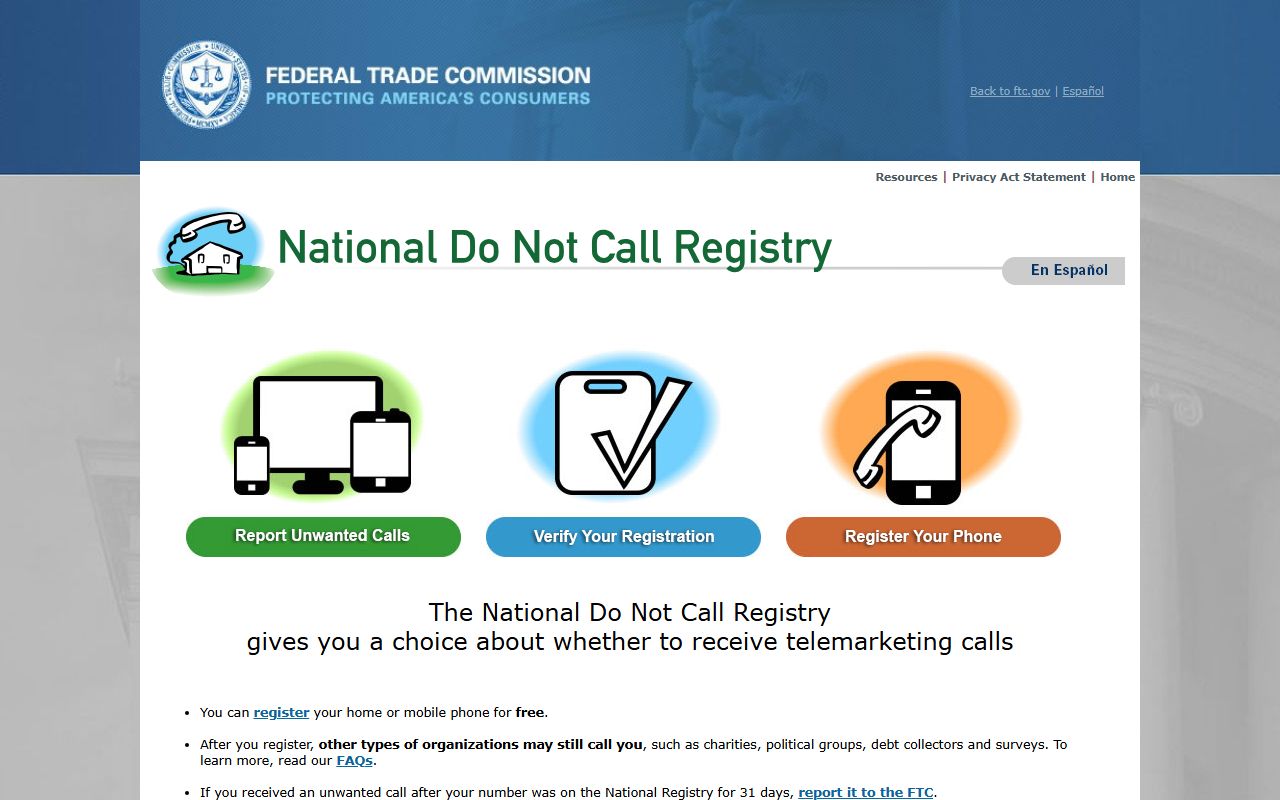
The FTC source fits toll-free and robocall context because many unwanted calls use spoofed or rotating caller IDs instead of a stable local Burlington number.
Burlington International Dialing
Burlington numbers sit inside the +1 country-code region used by the North American Numbering Plan. A caller from abroad reaches a Burlington number by dialing the caller's own international exit code, then 1, then the 10-digit Burlington number. A Burlington landline calling abroad uses 011 before the destination country code, while a mobile phone can use the plus sign.
- From a Burlington landline calling abroad, dial 011, then the destination country code, then the local number.
- From a mobile phone in Burlington, dial +, then the country code, then the local number.
- From abroad calling Burlington, dial the caller's international exit code, then 1, then the 10-digit number.
Saved contacts usually work best as +1 plus the full 10-digit number for Burlington contacts, especially when a person travels or changes carriers.
Burlington NXX Prefix Codes
The NXX is the three digits after the area code. Many official Burlington-area listings show older 336 prefixes tied to city and county public numbers, school district contacts, Cone Health and Alamance Regional patterns, Alamance Community College, and Elon University. Those patterns can help sort a number into a local context, but they are not identity proof.
Number portability is the main caution. A number that began on one carrier or line type may later move to another. A free carrier lookup or NPA-NXX tool can be a starting point, but official directories remain the better source for a public office, school, hospital department, or utility contact. A spoofed call can also display a familiar 336 or 743 number while coming from somewhere else.
Burlington Spam Call Labels
STIR/SHAKEN is the caller-ID authentication framework used by carriers to help assess whether a displayed number was authenticated through the phone network. It can cause labels such as "Likely Spam" or "Spam Risk" on a Burlington resident's phone. The label is a risk signal, not a court finding and not a guarantee that the caller is fake.
A real Burlington-area number can be mislabeled, and a scammer can spoof a familiar number. For a public agency, school, hospital, or utility callback, navigate to the official site and call the published number. Do not use a callback link or number from a suspicious voicemail or text. For reverse lookup context, the assigned Whitepages reverse-phone source shows the kind of third-party form some users consult after official checks.
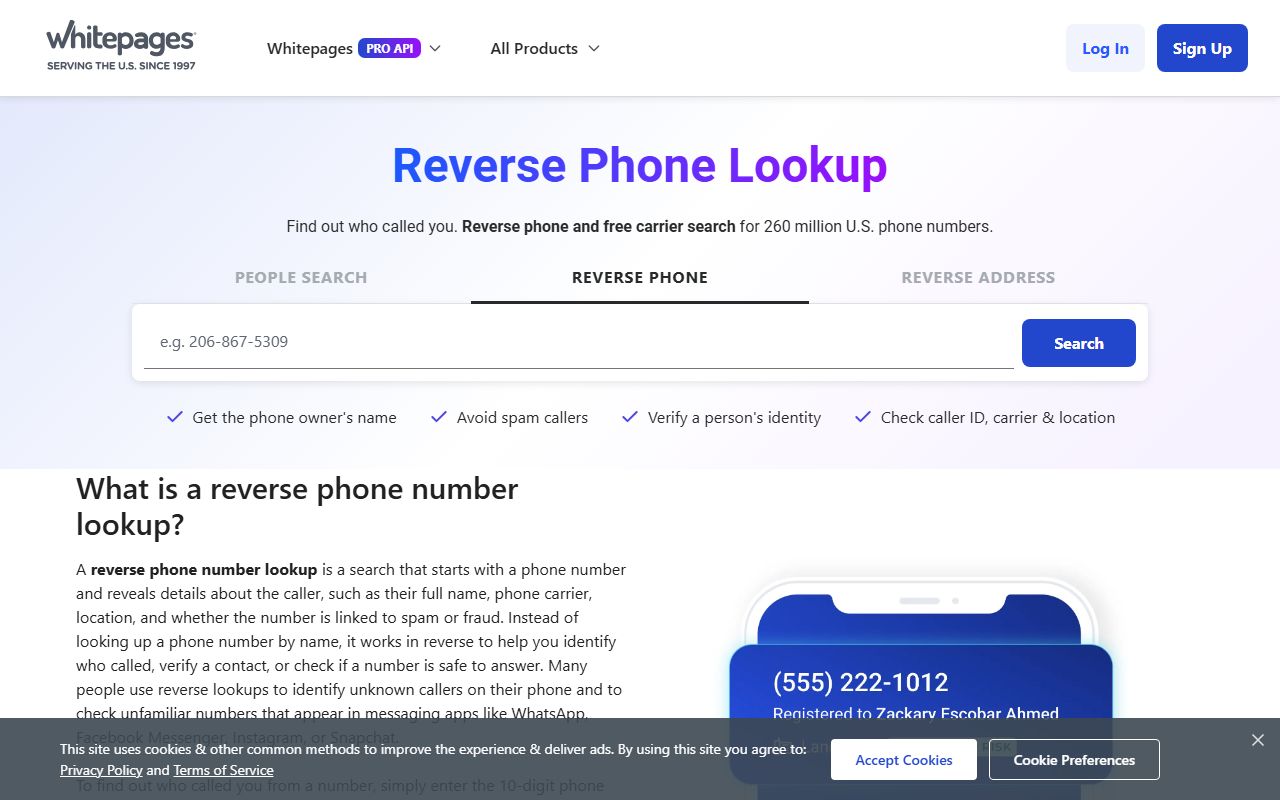
The reverse-lookup screenshot is a supplemental context image; official Burlington, Alamance County, school, utility, FCC, FTC, and carrier sources should carry more weight.
Phone Code Definitions
These terms separate the parts of a Burlington number from the short service codes and feature codes used around it.
- NPA
- Numbering Plan Area - the 3-digit area code at the start of every North American number.
- NXX
- Central office code - the 3 digits after the area code.
- N11
- 3-digit service codes (211, 311, 411, 511, 611, 711, 811, 911, 988).
- Vertical Service Code
- A * + 2-digit code that triggers a call-handling feature.
- Toll-Free Prefix
- An NPA that routes a call's billing to the called party (800, 888, 877, 866, 855, 844, 833).
- NANP
- North American Numbering Plan - the +1 country-code region covering the US, Canada, and 23 other territories.
The 988 Lifeline source is another assigned image because 988 is a service code with immediate crisis use.
The 988 source reinforces that some short codes are not lookup tools; they route people to time-sensitive help.
Check Burlington Dialing Codes
Use the right source for the kind of code being checked. NANPA is the authority for area-code maps and NPA assignments. The FCC explains 10-digit dialing, 988-related dialing changes, call authentication, and telecom complaint channels. NC 211, NC 811, and the 988 Lifeline are the better sources for their service routes. For Burlington city services, use the city directory because a local 311 route was not confirmed.
When the code is part of an unknown caller question, start with official verification. Check whether the area code is active, whether the number appears in a city, county, school, university, health, or utility directory, and whether the call demanded money or personal data. Third-party tools can add context, but a spoofed caller ID can make a local-looking number misleading.